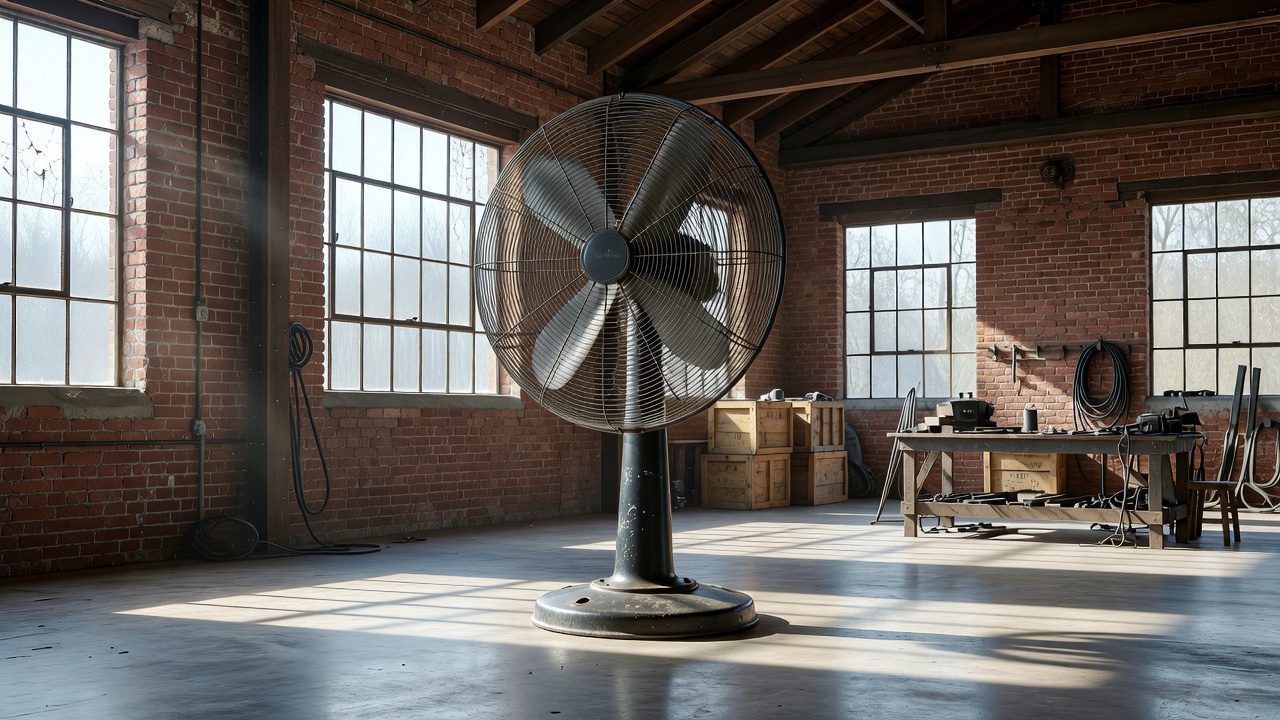
The Physics of Axial Flow Fans
Pedestal fans, also known as stand fans, are the quintessential example of axial flow technology. An axial fan operates by utilizing blades that force air to move parallel to the shaft about which the blades rotate. This structural design is highly efficient for generating a high volume of airflow (measured in Cubic Feet per Minute, or CFM) over a wide area, making them the preferred choice for cooling large, open rooms.
The efficiency of an axial fan is heavily dependent on three main factors: motor torque, blade diameter, and blade pitch (the angle of the blade relative to the rotational plane). A steeper blade pitch will "bite" more air per revolution, pushing a larger volume forward, but it requires a significantly more powerful motor to overcome the increased aerodynamic drag.
AC vs. DC Motor Technology
Historically, all household pedestal fans utilized Alternating Current (AC) motors. While reliable and inexpensive to manufacture, AC motors are limited in their speed settings (typically restricted to low, medium, and high) and are relatively inefficient in terms of electrical consumption.
The modern standard for premium pedestal fans is the Direct Current (DC) motor. DC motors rely on an internal transformer to convert the standard household AC power into DC. The benefits are profound:
- Energy Efficiency: DC motors consume up to 70% less energy than their AC counterparts for the same CFM output.
- Variable Speed Control: Instead of three rigid speeds, DC fans often feature 10 to 20 granular speed settings, allowing for perfect acoustic and environmental tuning.
- Acoustic Profile: Without the electromagnetic "hum" associated with alternating current frequencies, DC motors are virtually silent, meaning the only noise produced is the sound of the air being cut by the blades.
Structural Integrity: The Base and Stand
Because pedestal fans house heavy motors elevated 3 to 5 feet in the air, the structural integrity of the base is paramount. A high-quality pedestal fan requires a heavily weighted base to counteract the rotational force and vibration of the fan head. A lightweight cross-base is prone to tipping and can transfer motor vibrations into the floor, creating a resonating humming sound.
Height adjustability is achieved through a telescopic pole, usually locked in place via a friction collar. Furthermore, the fan head itself should feature a ratcheting tilt mechanism, allowing users to angle the airflow toward the ceiling to create indirect, whole-room circulation rather than a direct blast of air.
Comparing Blade Materials
The material composition of the fan blades significantly impacts both noise and performance:
- Plastic/Polycarbonate Blades: Lightweight, flexible, and quiet. They put less strain on the motor and are ideal for quiet domestic settings like bedrooms.
- Metal Blades (Aluminum/Steel): Highly rigid and capable of steeper pitches. They move significantly more air but produce more aerodynamic noise and require heavier, more powerful motors. These are best suited for garages, gyms, or large living spaces.
Optimizing Placement for Airflow
To maximize the utility of a pedestal fan, placement is key. Placing the fan in an open doorway facing inward can pull cooler air from an adjoining room or hallway. Alternatively, during the evening, pointing the fan out of a window will push hot, stagnant air out of the room, creating negative pressure that draws cool evening air in through other open windows.