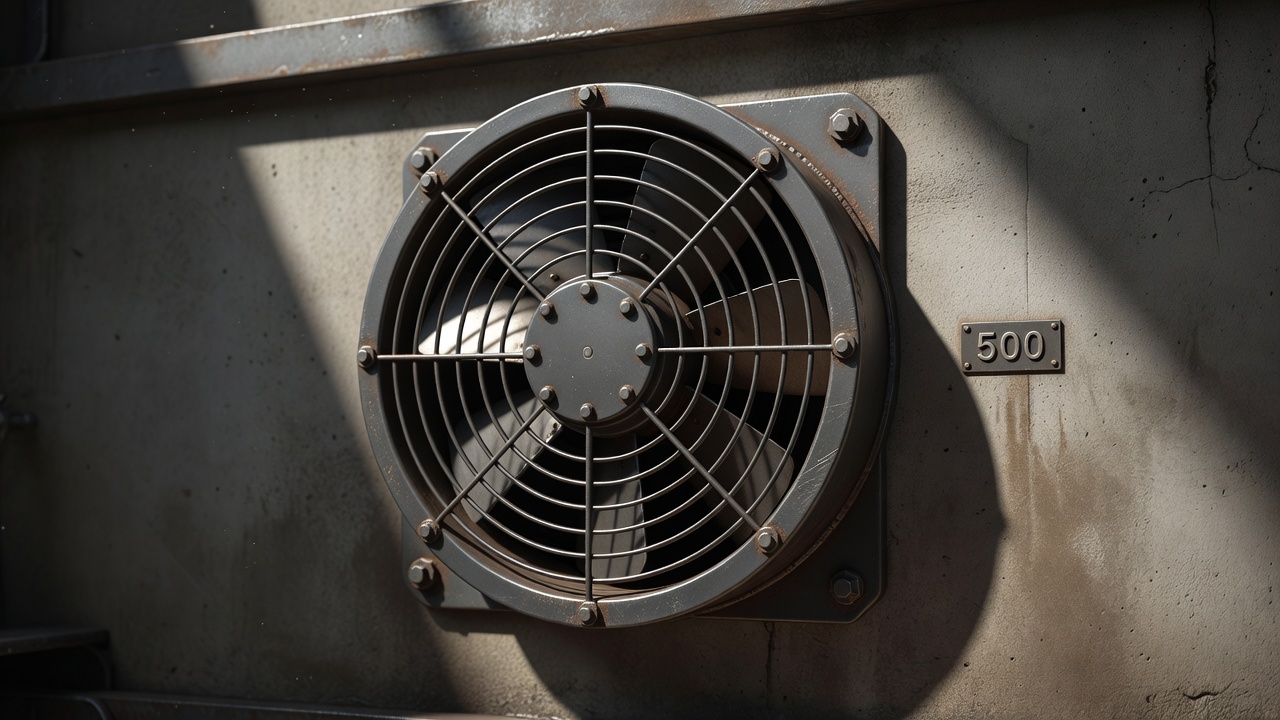
The Necessity of Mechanical Ventilation
Unlike cooling fans that simply recirculate indoor air, exhaust fans serve a critical structural and health function: the removal of moisture, heat, odors, and airborne pollutants from a building. In modern, tightly sealed, energy-efficient homes, natural ventilation is often insufficient. Without adequate mechanical extraction, high-moisture environments like bathrooms and kitchens rapidly become breeding grounds for mold, mildew, and structural rot, while allowing Volatile Organic Compounds (VOCs) to accumulate.
Calculating Extraction Requirements (CFM)
Exhaust fan capacity is measured in Cubic Feet per Minute (CFM). The baseline rule for residential bathroom ventilation is 1 CFM per square foot of floor space (assuming standard 8-foot ceilings). Therefore, a 100-square-foot bathroom requires a minimum 100 CFM fan. However, variables such as jetted tubs, enclosed showers, or higher ceilings require additional capacity.
For kitchen exhaust hoods, the calculation is based on the heat output of the stove. The standard recommendation is 100 CFM for every 10,000 BTUs generated by a gas range, or 100 CFM for every 10 inches of stove width for electric models.
Understanding Noise: The Sone Scale
Because exhaust fans are rigidly mounted to a home's structural framing, motor vibration and air movement noise can easily be amplified. Unlike decibels (dB), which measure sound pressure, exhaust fan noise is standardized in "Sones," a linear metric representing how sound is perceived by the human ear.
- 0.3 to 1.0 Sones: Extremely quiet, often imperceptible over the sound of running water. Ideal for primary bathrooms.
- 1.5 to 2.0 Sones: Noticeable but generally acceptable. Equivalent to a quiet refrigerator.
- 3.0+ Sones: Loud. Typically found in older builder-grade models or heavy-duty utility fans. Suitable for garages or workshops, but highly intrusive in living spaces.
The Importance of Ducting
An exhaust fan is only as effective as its ductwork. A high-CFM fan connected to restrictive, poorly routed ducting will suffer severe performance degradation. Best practices for ducting include:
Direct Routing: Ducts should be routed via the shortest possible path to the exterior of the building (roof or wall cap). Every bend or elbow in the ductwork increases static pressure and reduces actual air extraction.
Rigid vs. Flexible Ducting: Smooth, rigid galvanized steel ducting is always preferred. Flexible foil or plastic ducting creates internal turbulence and drag, reducing efficiency and trapping lint or grease.
Insulation: If ductwork passes through an unconditioned space (such as a cold attic), it must be insulated to prevent warm, moisture-laden air from condensing inside the duct and dripping back down through the fan housing.
Modern Features: Sensors and Timers
To ensure adequate moisture removal without relying on user memory, modern exhaust fans frequently incorporate smart features. Humidity sensors automatically activate the fan when ambient moisture rises above a set threshold (e.g., during a shower) and turn it off once the room is dry. Similarly, delayed-off timers ensure the fan runs for 15-20 minutes after the occupant leaves the room, which is the recommended duration to clear lingering airborne moisture.